$16.95
Paperback Original
ISBN: 978-1-932195-14-9
Synopsis
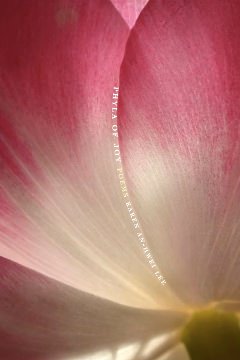
Karen An-hwei Lee’s third book is a beautiful and sustained meditation on the impermanence of humanity’s essential components: memory, spirituality, emotion, thought....Contemplative and linguistically sophisticated, Phyla of Joy is simply exquisite —‘ink and stanza / flow like wind on grass.’
— Rigoberto González
There’s an undeniable audacity in a poet using the word “joy” in our beleaguered world. In her new book, Karen An-hwei Lee combines scientific precision and an appetite for far-flung vocabularies with a fascination for the sources of rapturous emotion.
In poems that roam from the intimacy of prayer to the art of brewing tea, from bamboo-related famine to quasars, the globe’s minor seas, and the nuptial flight of ants, Phyla of Joy reaches toward ecstasy.
Reader's Companion
Tupelo Press is pleased to provide the
Phyla of Joy Reader’s Companion in free, downloadable PDF format. Click on the link to download. (1.9 M)
Selected Poems
Prayer for the Underground Supplicant
Remember old flowers cast in your rustling arms,
liverwurst wrapped in newspaper, one blistering pound
or the moon's cracked birch bark
frail as a dollar on a blind woman's face, pale hydrangea
shredded and falling in rare archives, a paper subway
in a supplicant’s underground darkness, swaying,
and a melanin-rich flower in this fluorescent tube
translocating water to and from unassailable air.
This is your graduated body, no ordinary
engine in the night.
Reviews
Reading Phyla of Joy is akin to listening to the reverberations of a singing bowl: first, one is attracted to the struck note, but the diminishing vibrations last a long time, compelling a continuing reflection.
— Ann E. Michael,
Poets' Quarterly
Karen An-hwei Lee's third collection, Phyla of Joy, shines with poems of refined craft and subtle linguistic play. Love of language, love of the divine and reverence for the embodied human feminine each together and in turn animate the delicate interior and closely magnified exterior landscapes of these poems.
— Janelle Elyse Kihlstrom,
Melusine
Instead of distancing the Divine from cigarettes and kitchen fires, Lee welcomes the one into the other. But the startling result isn’t a third world tangled with dichotomies. The result is Phyla of Joy, a portrait of the world we live in, but reclaimed through gracious eyes that somehow inject light into everything from famine to girls born with cleft palates.
— Eugenia Leigh,
The Lantern Review blog
In Phyla of Joy, poetry is a form of spirituality. It is easy to recognize Biblical allusion in Lee's titles—many are “Psalms” or “Songs,” “Prayers” or “Invocation.” In “Preservation of Rare Languages,” Lee writes: “As we pray, languages/ are zephyrs, eddies of air” and “Women/ speak rare languages to children/ keeping tongues alive.” Language is legacy, and it is a privilege that comes along with being a woman that we can pass along language to our children. In this way, language is a way of building community, of forging and continuing relationships, of bridging.
—Angela Veronica Wong,
Iowa Review
Lee’s subject in this book is lyricism, rapture, canticles in all their shapes and flavors... These are passionate, visionary poems. Beautiful.
— Vince Gotera,
North American Review