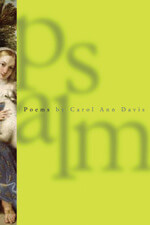
Psalm
by Carol Ann Davis
$19.95
“There is a particular quality of quietude and stillness that suffuses these painterly poems of Carol Ann Davis, so involved with loss, motherhood and the shifting tonalities of light that transform the domestic and ordinary into the strange and extraordinary that, combined with tenderness of address, approach the worshipful and make a number of these poems so moving and distinctive.” — August Kleinzahler
Format: Paperback / Hardcover
Out of stock
The journal Image has published a perceptive review of Carol Ann Davis’s beautiful Psalm. It concludes:
“When Davis combines this keen eye for detail with a direct emotional tone, she is at her best. In these moments, her precise images become piercingly clear. I look forward to seeing how she develops this clarity of vision in future books.”
You can download a .pdf of the complete review here.
The Spring, 2008 issue of The Southern Review contains an eloquent review of Carol Ann Davis’s Psalm. Alison Pelegrin writes: “The finest poems in Psalm dwell on small things, itself a reminder that under the watch of the right eyes, everything can be sacred. In “Grief Daybook III,” Davis quotes some liner notes from a Coltrane record, which read, “it all has to do with it,” and she certainly adheres to that premise in her collection, with a song of praise for everything from grief and death, the sound of a child squealing, to stave church paintings.” You can read the rest of this perceptive review on the Tupelo Press website.
“Grief Daybook II” from Carol Ann Davis’s Psalm was Poetry Daily’s poem of the day for December 1, 2007.
Psalm affirms what’s most essential to ordinary life and to artistic expression: the fact that one is permitted to walk the earth and partake of its wonders.
Psalm searches for ways of verifying the world through art and experience. In a narrative arc, Psalm takes the poet from her father’s death to her son’s birth. In between are all the elements of the imagination: faith, art, music, culture. This world expands to include Vermeer’s nuns, Cornell on a bike ride on the Brooklyn promenade and the sound of Django Reinhardt all simultaneous to her son’s cries, his presence. The poet moves forward inside and then away from grief. Her lyric poems begin to furnish the afterlife, even as they do the time before birth.
“There is a particular quality of quietude and stillness that suffuses these painterly poems of Carol Ann Davis, so involved with loss, motherhood and the shifting tonalities of light that transform the domestic and ordinary into the strange and extraordinary that, combined with tenderness of address, approach the worshipful and make a number of these poems so moving and distinctive.”— August Kleinzahler
“Carol Ann Davis’s poems are so precise they are almost hallucinatory. And in some poems she sets hallucination free. The precision is true, creating a marvelously jarring effect. She is always studying reality, with a microscope that creates sure distortions. There is a sad pageant going on in these poems, one that breaks your heart. And then gives you your life back all over again.” — James Tate
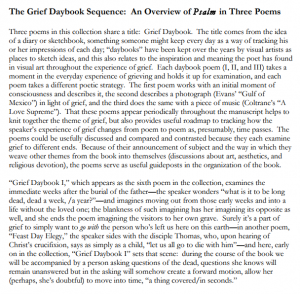
Tupelo Press is pleased to provide the Psalm Reader’s Companion in free, downloadable PDF format. Click on the link to download. (249 K)
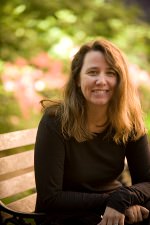 Carol Ann Davis’s first collection Psalm appeared from Tupelo Press in 2007, the same year she was awarded a fellowship in poetry from the National Endowment for the Arts; Atlas Hour followed in 2011. A former longtime editor of the journalCrazyhorse, her work has appeared in The American Poetry Review, Agni, The Threepenny Review, and Volt. In 2015, an essay she published in The Georgia Review was named a finalist for a National Magazine Award in the Essays and Criticism Category. She lives in Sandy Hook, CT, with her husband and two sons, and serves on the faculty at Fairfield University, where she teaches in the Fairfield University Low-Residency MFA Program.
Additional information
| Dimensions | 6 × .5 × 9 in |
|---|---|
| Format |
Plainsong
And the dogs will have their routes,
the birds will be uncovered breathing
in the trees, the delivery boys
will hold their fancy books of orders. Coming in low
in fog, the Remembrance Day bombers
fly their rotations, the ocean grown senile,
the intersections safe
in their half-drawn Xs
—Love’s Car Service
and the boys outside it
smoking.
Download the free reader’s companion here.